.png)
SUMMARY
Role: UX/UI Designer & Creator (personal project)
Platform: Web app, camera-based motion tracking
Tools: Lovable, Figma
Live product: stroked.app
Context
Following a stroke which I have suffered at thet age of 22, I experienced a lot of challenges in my rehab. I decided to launch andapp helps patients like myself follow and stick to a therapy plan, helping improve their mobility.
Patients require daily, continued practice to retain their mobility. But they are are sent home with generic paper exercise sheets and zero real-time movement feedback. Over 70% of at-home therapy fails due to 3 points:
Patients find it very difficult to get the best training plan in the abbsence of the therapist and their progress.
Patients don't have enough support and motivation to stick the rehabilitation.
There is no feedback regarding progress, corectness of the movement, and activity tracking.
.png)
Design Objective
My goal was to create an accessible digital physical therapist that tracks joint movement using your phone or laptop camera, gives your instant rep verification, and gamifies your skill recovery without an overwhelming or intimidating experience.
Persona
To design an experience that addresses the full spectrum of post-stroke recovery, I combined myown long-year rehab experience with measurements and feedback which I collected from my users. I created the onboarding to see what types of problems users are adressing, customized the plan and observed their retention broken down by exercise, time, etc.
Finger / Arm Movement
Shoulder movements, core movements
Functional motor regain / daily tasks
Design approach
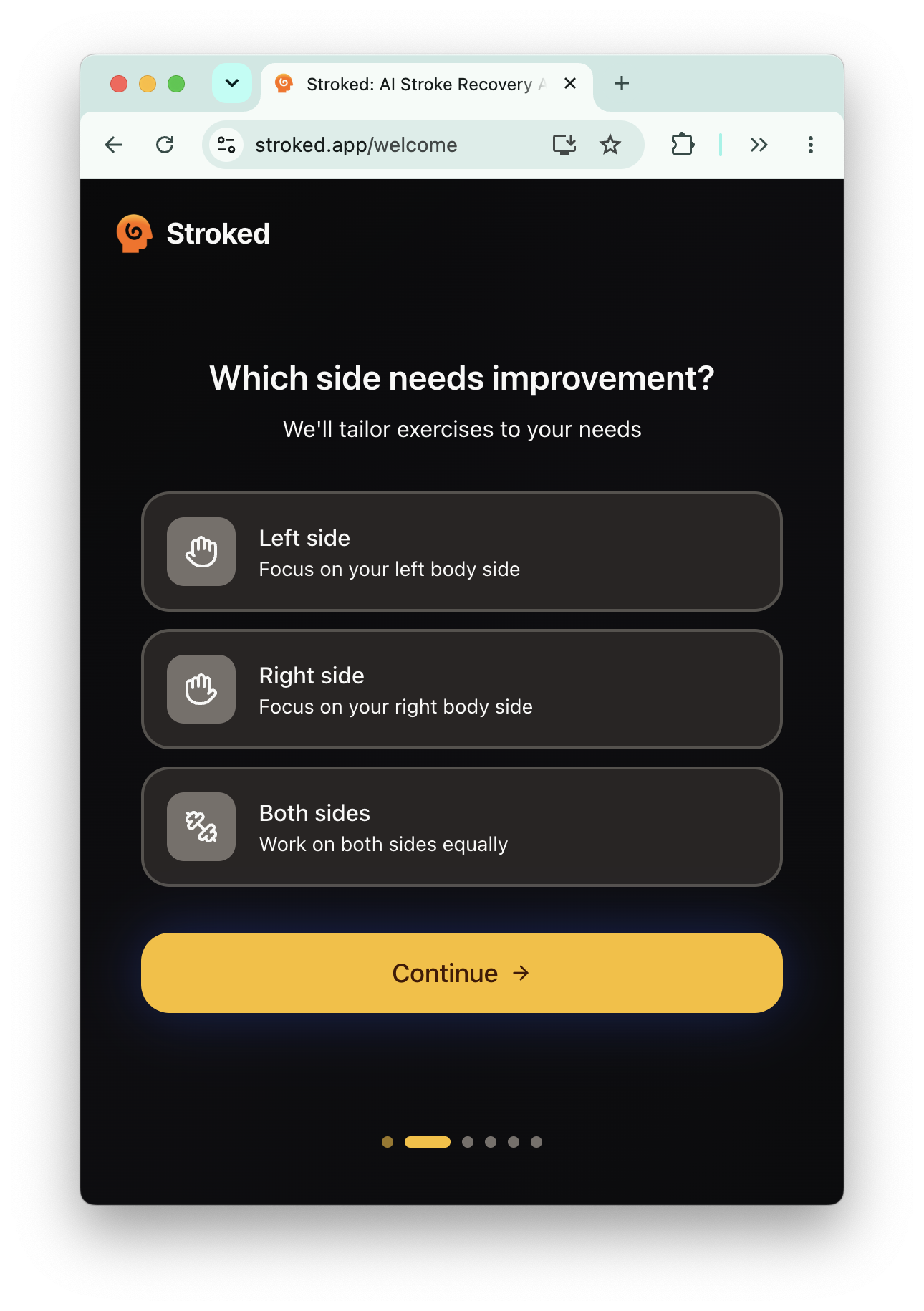
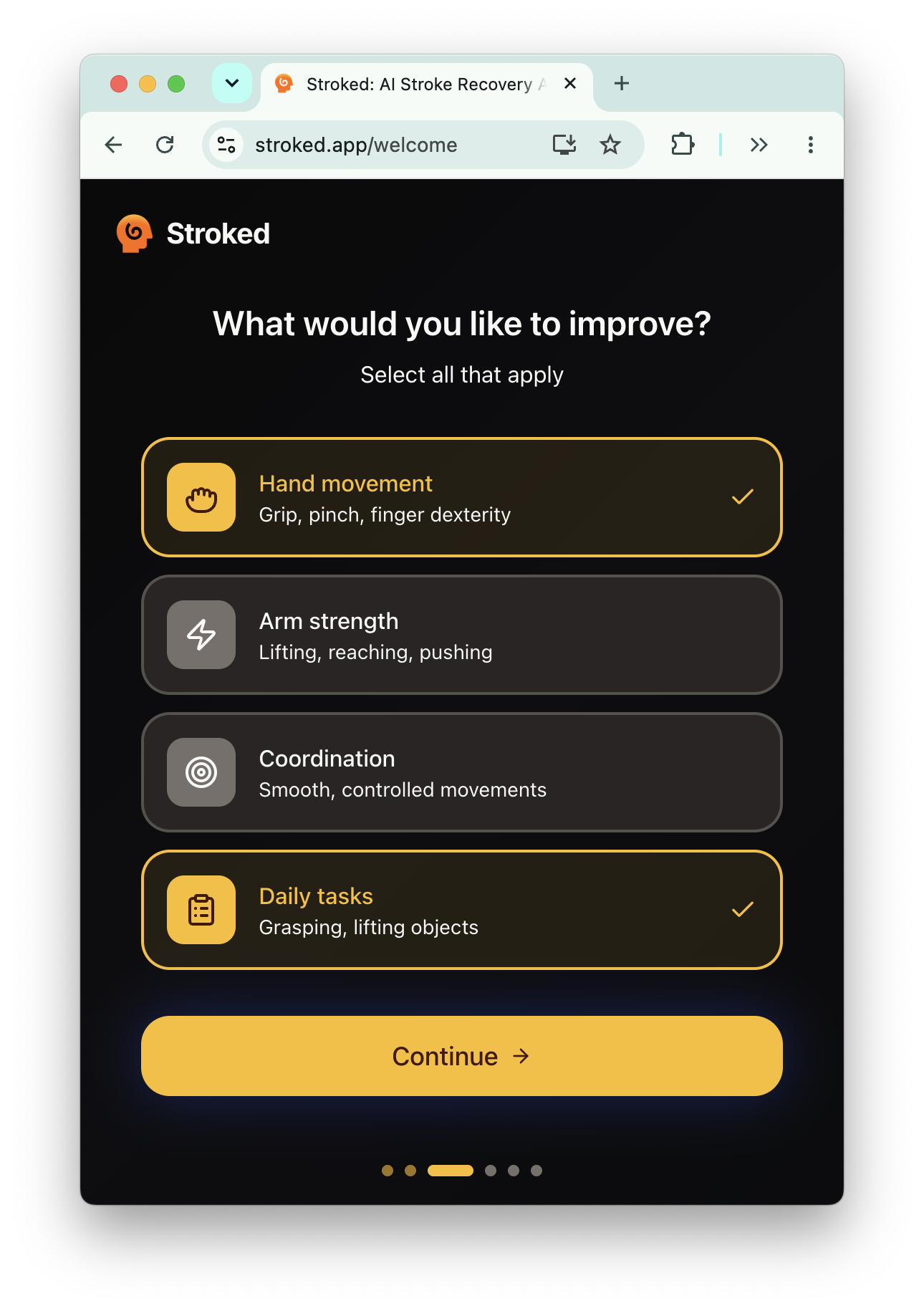
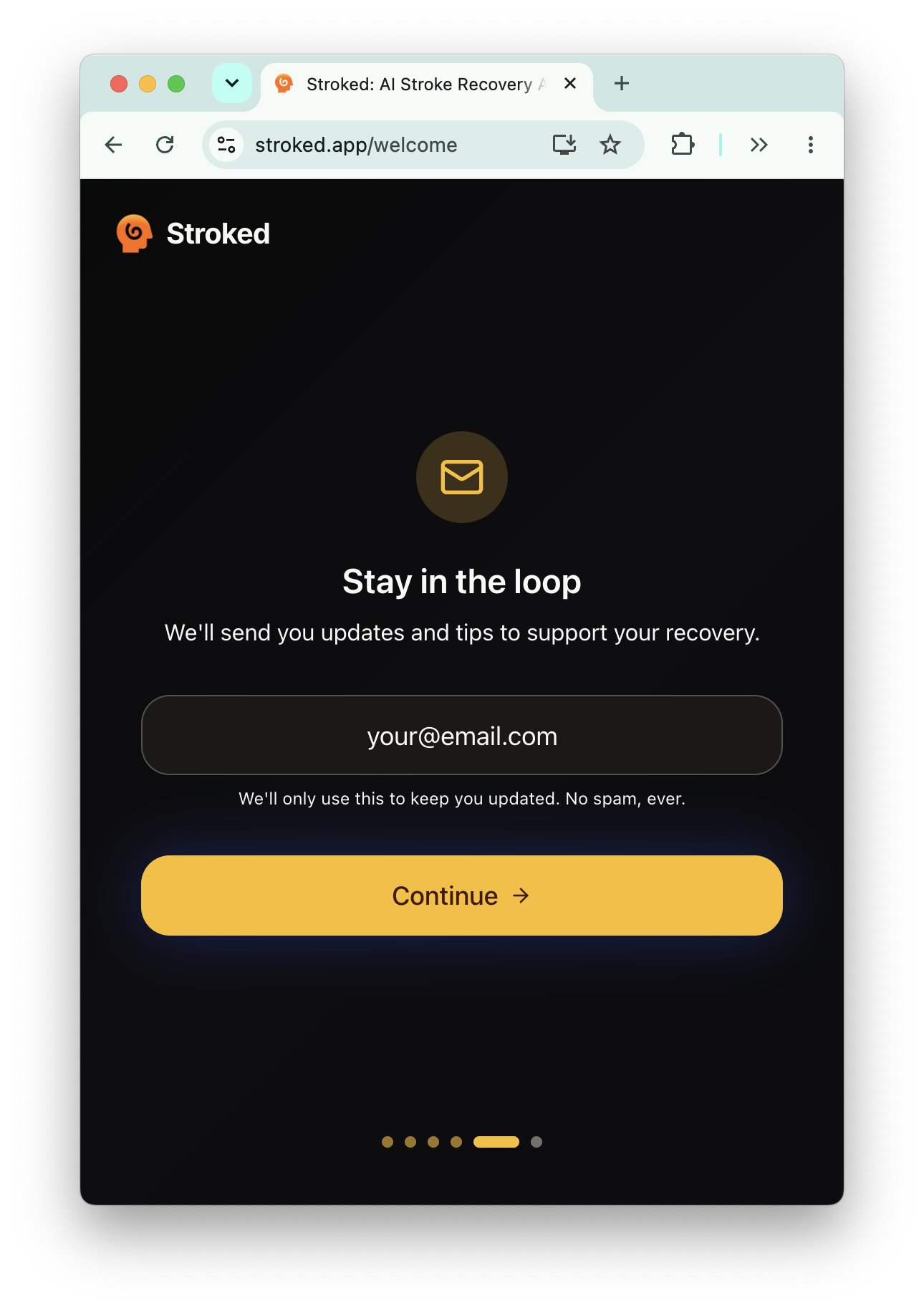
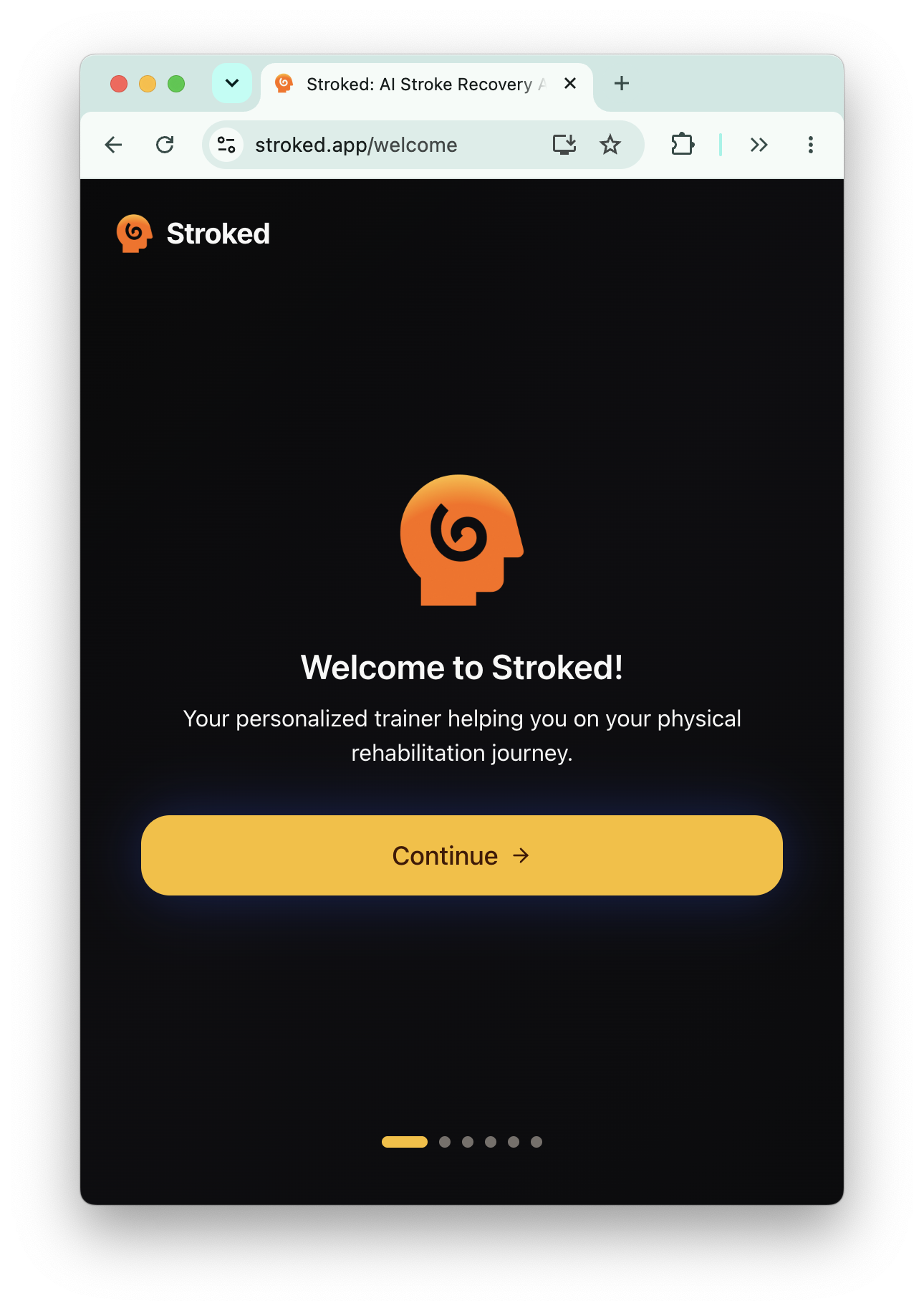
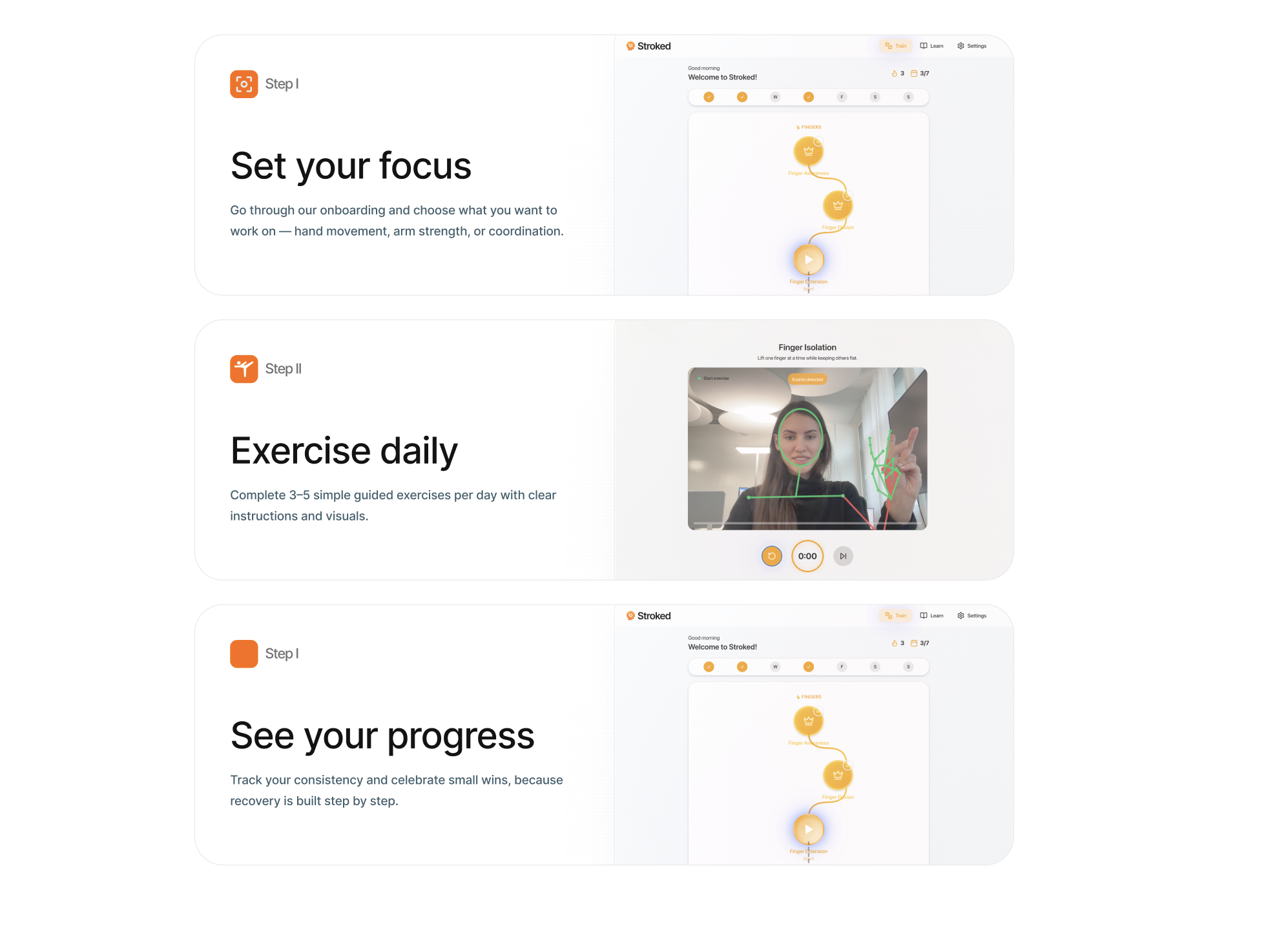
Onboarding. To prevent early abandonment among motor-impaired users, I designed a 4-step onboarding flow, where I'm collecting data to understand the impared area, the target movement group and medical condition.
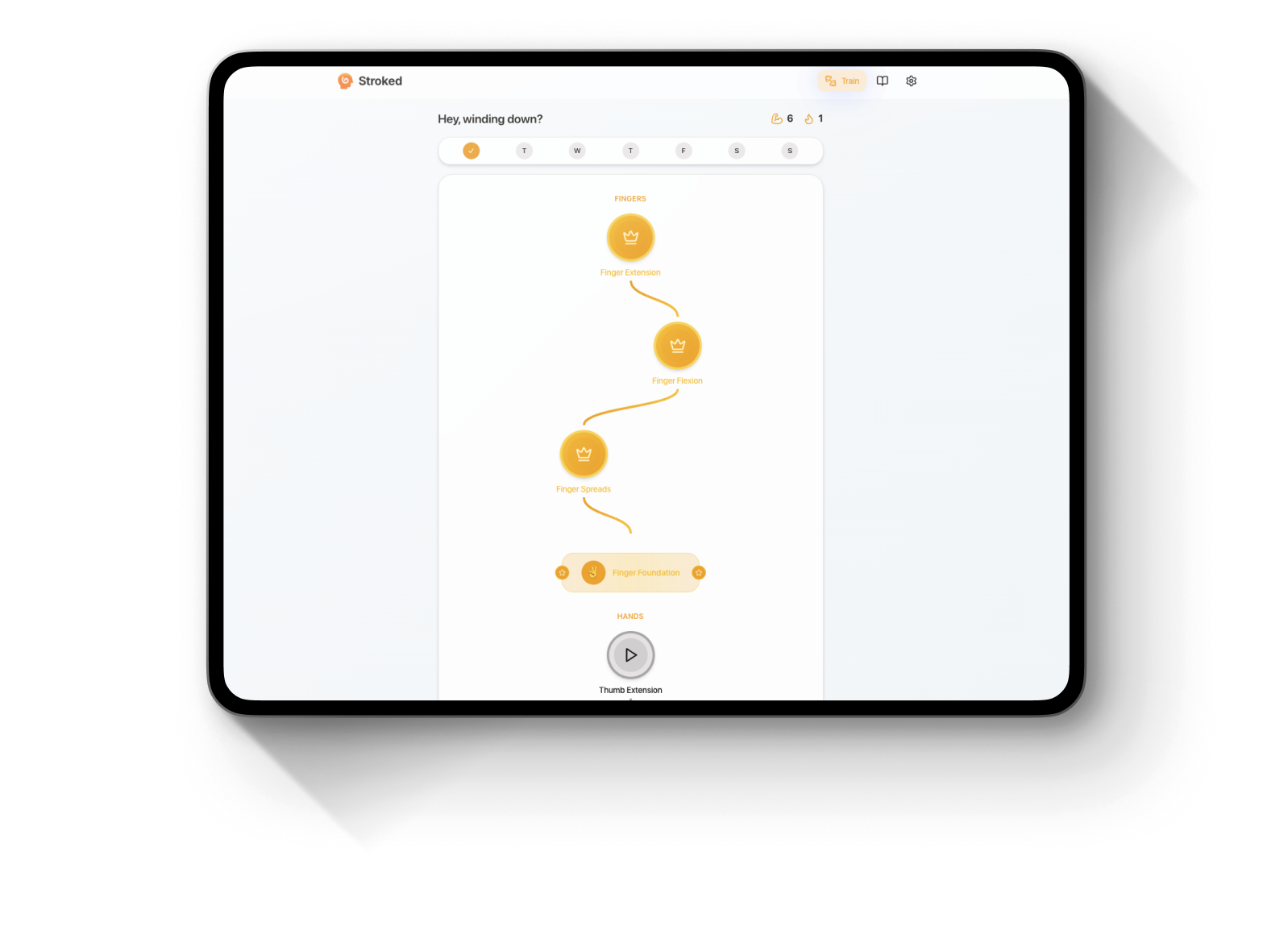
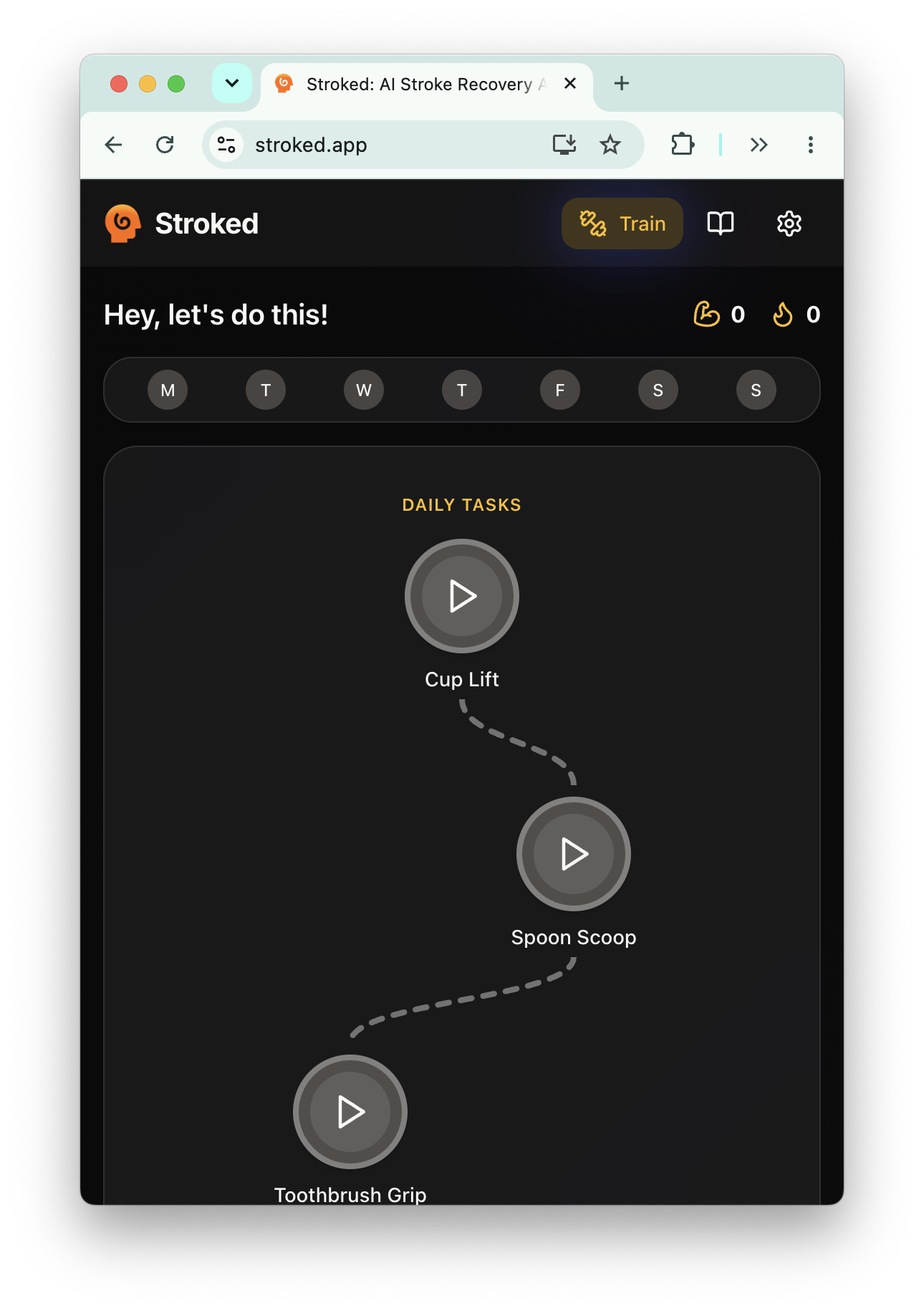
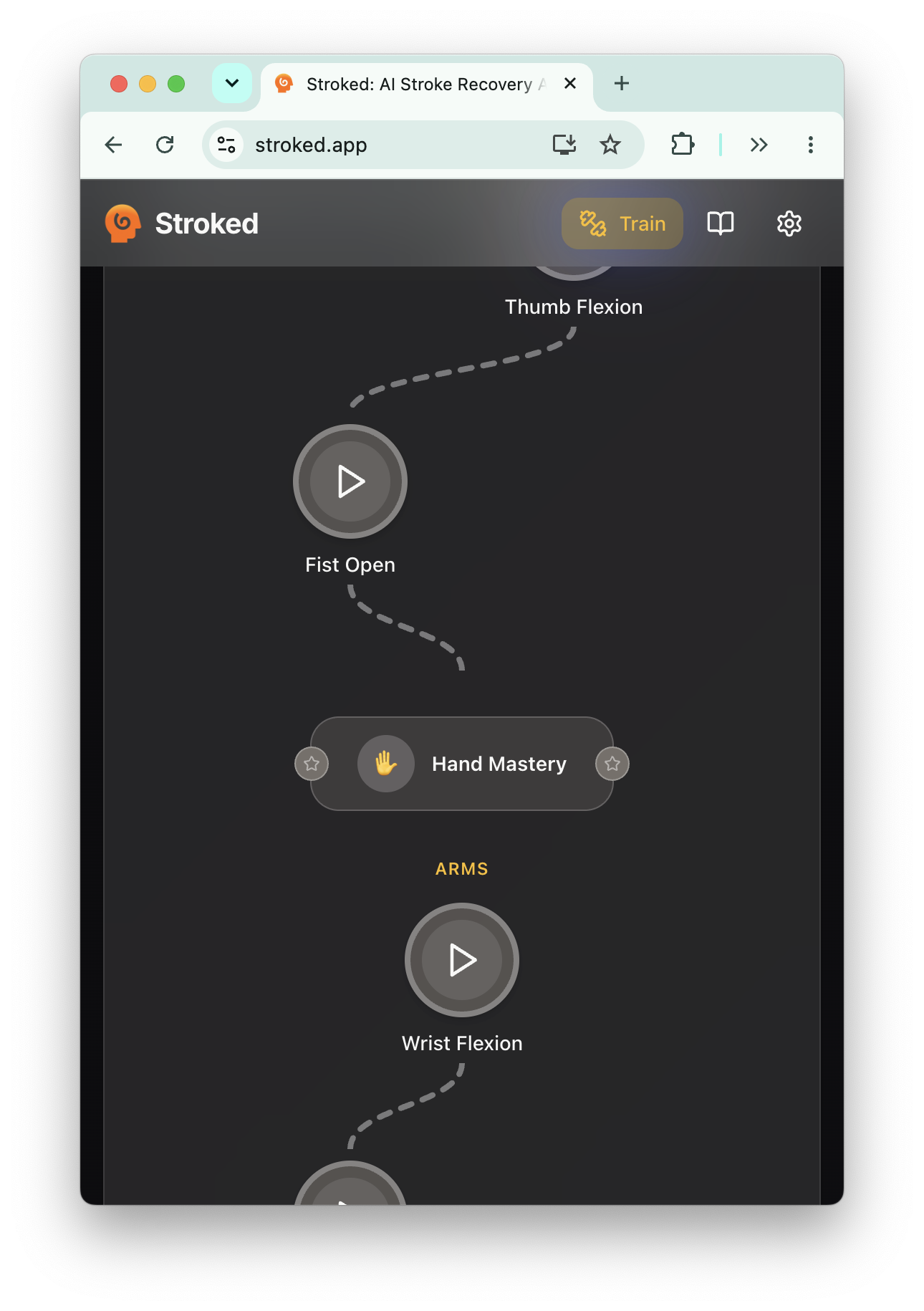
Structuring the exercise plan. Rather than presenting exercises as a flat list or a dashboard, I organized them into a progressive skill-tree structure grouped by body region — fingers, hands, arms, shoulders, core, legs, full body, and daily tasks (like lifting a cup or holding a spoon). This mirrors how physical rehabilitation actually progresses, from small isolated movements toward functional, real-world tasks, and gives users a visible sense of progression rather than an undifferentiated exercise list.
Camera-based feedback. Each exercise uses the device camera to track the joints relevant to that movement, based on a setting for which side of the body is affected. I am giving clear visual feedback: the exercise border glows, then flashes once a rep is counted. This gives the user a clear, low-effort signal of correct movement, exactly like standing in front of therapis.
I designed and built this using Lovable, which let me move quickly from concept to a working, testable product as a solo designer.
.png)
Motivation and consistency. Recovery is driven by repetition over time, not any single session, so I designed a weekly practice structure with a visible progress bar and a streak counter, plus a badge system tied to completing each body-area category (e.g., "Finger Foundation," "Hand Mastery," "Full Recovery Champion").
Accessibility.
Because the target users often have reduced fine motor control, fatigue, or visual strain, I built adjustable tracking sensitivity (low/medium/high) to accommodate different ranges of motion, along with large text, high-contrast, and reduced-motion display settings.
testing
I validated the experience in two ways:
Self-Use: Daily self-testing throughout my own motor recovery to evaluate joint fatigue, latency tolerance, and screen legibility during active movement.
User Feedback: I collected feedback from my users using Google Forms and adjusted the feature set based on the feedback I received.
challenges
Reaching a rehabilitation center regularly is often difficult for stroke survivors, whether due to travel time, mobility limitations, or logistics, which reduces how often people can get supervised practice. On top of that, sustaining the consistency and energy needed for daily rehab is hard without external structure or accountability, especially once formal therapy sessions end.
On the technical side, tuning the camera's tracking sensitivity was a real challenge, since it needed to work reliably for people with limited, shaky, or partial movement, not just able-bodied test users, which is a very different calibration problem than typical motion-tracking use cases.
Outcome / impact
I managed to put out in the market a product that so far has beed used by more than 1000+ users. I also discovered that people that were coming with other types of problems, such as injury.
It is really a personal joy for myself to see that I can bring a little bit of help to users that are suffering from such a long-lasting handicap and that through technology I can improve their lives.